Business Guide to South Dakota
Introduction
South Dakota offers a business-friendly climate with one of the lowest tax burdens in the United States. Characterized by no corporate income tax, no personal income tax, and streamlined regulatory processes, the state attracts entrepreneurs seeking cost-effective operations. Its central location in the Upper Midwest provides access to major highways and intermodal transportation hubs, facilitating efficient distribution across regional markets. With a stable economy supported by agriculture, manufacturing, and growing technology sectors, business owners benefit from predictable operating costs and a supportive government. The state's workforce is skilled in agribusiness and transportation logistics, while emerging clusters in healthcare and finance present new opportunities. South Dakota's commitment to infrastructure investment and digital expansion ensures companies can scale efficiently. This guide outlines essential information for launching and growing your enterprise in South Dakota.
Why Start Here
Entrepreneurs choose South Dakota for its uniquely favorable tax structure; there is no corporate or personal income tax, and property taxes are competitive. The state offers targeted incentive programs including workforce development grants and job creation tax credits that lower entry barriers. A strategic central location reduces distribution costs for regional markets, while modern infrastructure and expanding broadband networks support digital ventures. South Dakota's small-business-friendly regulations minimize administrative complexity, and average startup costs are significantly lower than national benchmarks. Combined with a skilled yet affordable workforce and high quality of life, the state provides a solid foundation for sustainable business growth.
South Dakota Economic Snapshot
South Dakota Business Scorecard
Infrastructure & Connectivity
Workforce Quality
Industry Landscape in South Dakota
South Dakota's economy is anchored by agriculture, with corn, soybeans, and livestock forming the traditional base. Manufacturing and processing industries support value-added production, while emerging technology and financial services clusters in Sioux Falls and Rapid City drive diversification. With a population nearing 900,000, the state offers a stable consumer market complemented by low overhead costs. Robust transportation infrastructure, including major interstate corridors and regional airports, ensures efficient supply chain management. Public-private partnerships have expanded broadband access, improving connectivity for rural businesses. Government incentives such as workforce training grants and property tax abatements further enhance competitiveness. The state's pro-business regulatory environment and balanced budget policy contribute to economic resilience. Investors benefit from transparent governance and strategic central location for accessing Midwestern and Western markets.
Business Environment
South Dakota's business environment is characterized by a transparent regulatory framework and low operational costs. The absence of corporate and personal income tax reduces annual overhead for companies of all sizes. Administrative procedures for business registration and permitting are streamlined through online platforms, reducing time-to-market. Local economic development offices collaborate with new and existing businesses to secure workforce training grants and site selection assistance. Community college and university partnerships deliver specialized training programs tailored to industry needs. Affordable real estate and utility rates across urban and rural areas support diverse operations. A stable political climate and balanced budget policy ensure predictability for long-term planning. Quality of life metrics, including low crime rates and outdoor recreation access, aid in talent attraction and retention.
Regulatory & Tax Climate
Regulatory requirements in South Dakota are designed to be straightforward and predictable. Business registration is completed through the state's online One Stop portal, consolidating filings for corporate, tax, and licensing needs. Environmental permits are administered at the state level, with clear guidelines for water use, air quality, and waste management. Most small businesses qualify for expedited reviews under the Small Business Regulatory Flexibility Act. There are no local personal income taxes, and sales tax exemptions apply to manufacturing equipment and research activities. Annual reporting obligations are limited to a basic franchise tax report and financial statements for larger entities. Compliance assistance resources are available through the Department of Revenue and local Chambers of Commerce.
Business Registration Process
Startup & Business Conditions in South Dakota
Total Business Types
Average Startup Cost
Difficulty Breakdown
| Business Type | Estimated Startup Cost | Difficulty | Profit Margin |
|---|---|---|---|
| Accounting and Tax Practices | USD$: 42,000 - 126,000 | Medium | 25.00% |
| Agriculture and Farms | USD$: 20,500 - 61,500 | Medium | 25.00% |
| Agriculture and Farms | USD$: 10,000 - 50,000 | Hard | 10.00% |
| American Restaurants | USD$: 62,000 - 186,000 | Medium | 25.00% |
| Architecture and Engineering Firms | USD$: 78,500 - 235,500 | Medium | 25.00% |
| Art Galleries | USD$: 38,000 - 114,000 | Medium | 25.00% |
Top Cities for Business in South Dakota
Explore business opportunities in these key cities across South Dakota
Sturgis
Business Guide for Sturgis
Explore OpportunitiesBrookings
Business Guide for Brookings
Explore OpportunitiesHuron
Business Guide for Huron
Explore OpportunitiesMadison
Business Guide for Madison
Explore OpportunitiesHot Springs
Business Guide for Hot Springs
Explore OpportunitiesHarrisburg
Business Guide for Harrisburg
Explore OpportunitiesMitchell
Business Guide for Mitchell
Explore OpportunitiesSpearfish
Business Guide for Spearfish
Explore OpportunitiesVermillion
Business Guide for Vermillion
Explore OpportunitiesBusinesses for Sale in South Dakota
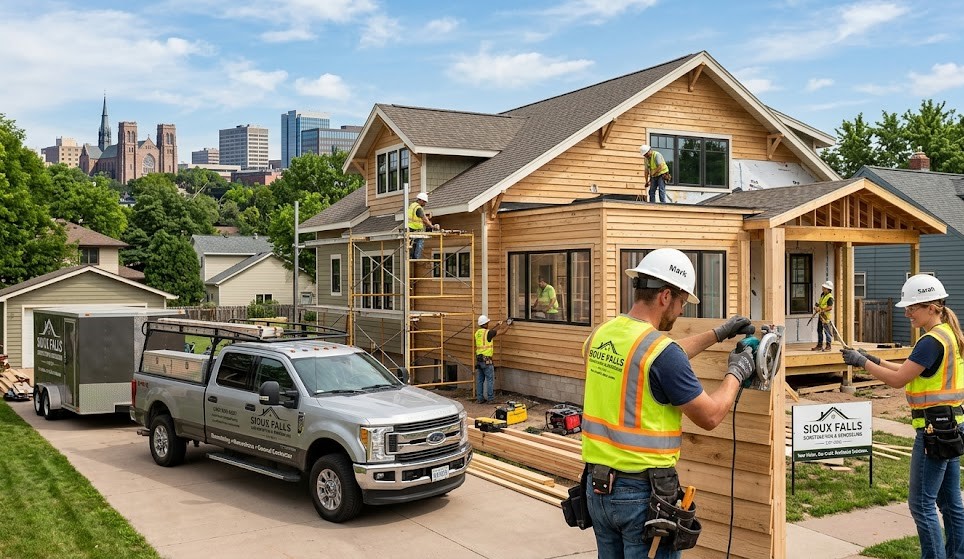 Profitable Construction & Remodeling Company for Sale – Sioux Falls –
Sioux Falls
Profitable Construction & Remodeling Company for Sale – Sioux Falls –
Sioux FallsAsking Price: USD$: 780,000
Start your business journey in South Dakota today and access resources for success.
Get personalized assistance with your business journey in South Dakota
Get Started Today